
 Pirates, buried gold, mysterious caves, and centuries of Hudson River folklore
According to an enduring legend, somewhere along the Hudson River, a pirate’s fortune lies hidden beneath the rocks, buried deep in the earth, or sealed inside a cave overlooking the water.
For more than three centuries, tales of Captain William Kidd’s lost treasure have captivated Hudson Valley residents’ imaginations. From the towering cliffs of the Hudson Highlands to the wooded shores of Westchester County, rocky outcroppings and secluded coves have long been linked to the notorious sea captain.
But was Captain Kidd really a pirate? Did he sail the Hudson River? And could some of his legendary treasure still be hidden along its banks?
The answers lie somewhere between documented history and the region’s rich storytelling tradition.
Who Was Captain William Kidd?
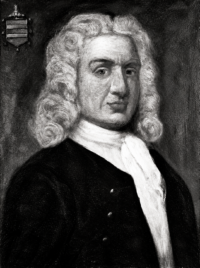 Long before he became one of the world’s most famous pirates, William Kidd was a respected sea captain, successful merchant, and prominent resident of colonial New York.
Born in Scotland around 1645, Kidd made his fortune at sea before settling in New York in the late 17th century. He married a wealthy widow, Sarah Oort, owned property in Manhattan, and moved in the city’s influential merchant and political circles.
In 1695, Kidd received a commission from powerful English officials to hunt pirates and seize enemy French vessels. Commanding the Adventure Galley, he set sail on what was intended to be a legitimate privateering expedition.
A privateer, unlike a pirate, operated under government authority and could capture certain enemy ships during wartime.
But Kidd’s voyage proved disastrous. His crew grew restless, his ship deteriorated, and his capture of the richly laden Quedagh Merchant in 1698 brought accusations of piracy. Although Kidd argued that the vessel was a lawful prize, its ties to powerful trading interests made the seizure politically explosive.
Returning to North America in 1699, Kidd hoped to defend his actions. Instead, authorities arrested him in Boston and sent him to England for trial.
On May 23, 1701, Captain Kidd was hanged at London’s Execution Dock after being convicted of piracy and the murder of a crewman.
His death marked the beginning of an even greater legend.
The Hudson Valley’s Legendary Treasure Sites
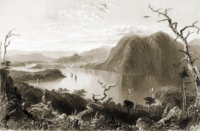
View of the Hudson River from Crow’s Nest Mountain
In the decades after Kidd’s execution, stories circulated that he had hidden enormous riches along the Hudson River. Treasure hunters searched hillsides, caves, islands, and riverbanks, sometimes guided by mysterious maps, divining rods, or supposed supernatural signs.
Several locations became especially famous.
Kidd’s Plug — Crow’s Nest Mountain
Near West Point, the imposing cliffs of Crow’s Nest Mountain gave rise to one of the Hudson Highlands’ most intriguing pirate legends.
A projecting rock formation, traditionally known as Kidd’s Plug, was said to conceal the entrance to a cavern filled with barrels of gold and silver.
According to folklore, the enormous stone acted as a cork, sealing the treasure safely inside the mountain. Its position high above the river made the story even more mysterious. How could anyone have placed such a massive stone there without extraordinary assistance?
For generations, the supposed hiding place inspired speculation, yet no evidence of Kidd’s treasure has been found there.
Kidd’s Point and the Sunken Treasure Ship
Near the southern entrance to the Hudson Highlands, stories circulated of a ship carrying Kidd’s treasure sinking in the river.
One version places the disaster near the old Caldwell’s Landing area, where Kidd’s crew supposedly abandoned a treasure-laden vessel in a violent storm and escaped into the surrounding wilderness with whatever valuables they could carry. The rest, according to the tale, disappeared beneath the Hudson.
Although the story has long attracted treasure seekers, no established historical evidence shows that Kidd’s famous Quedagh Merchant sank in the Hudson River.
Money Island — Croton Point
At Croton Point, a peculiar wooded mound once known as Money Island, or Money Hill, became another rumored hiding place. Its unusual shape and reports of Spanish coins found nearby fueled speculation that pirates had used it as a secret treasury.
Some versions of the legend claimed that Kidd himself buried gold there. Others suggested that supernatural forces guarded the treasure against anyone attempting to recover it.
Money Island survived well into the 20th century before parkland improvements leveled it. Its physical disappearance did little to diminish the stories associated with it.
Captain Kidd’s Rock — Sleepy Hollow
At Kingsland Point, along the Hudson River in present-day Sleepy Hollow, a large rock became associated with alleged meetings between Captain Kidd and Frederick Philipse, the wealthy colonial merchant and landowner.
According to local tradition, the two men used the waterfront site for secret trading.
Philipse had extensive commercial interests linking New York to overseas markets, making the imagined relationship especially intriguing to later storytellers.
Whether the two men ever met at the rock remains unknown, but the tale became firmly embedded in the folklore of the Tarrytown and Sleepy Hollow waterfront.
Kidd’s Humbug: When Treasure Hunting Became an Obsession
By the 19th century, the search for Captain Kidd’s gold had become something of an industry. Speculators organized elaborate expeditions, investors supplied capital, and treasure seekers sought fortunes supposedly buried beneath the Hudson.
One especially colorful chapter centered on an ambitious search near the Hudson Highlands, where treasure hunters tried to recover wealth they believed lay beneath the riverbed.
The extraordinary undertaking became known as Kidd’s Humbug, a fitting reminder of how readily the promise of pirate gold could inspire questionable schemes and costly disappointments.
The name even entered official geographic records, preserving a curious piece of Hudson River history. No legendary fortune emerged from the search.
The Treasure That Really Existed
While the Hudson Valley’s hidden gold remains the stuff of legend, Captain Kidd did leave behind a genuine treasure — and its recovery is documented.
In 1699, shortly before his arrest, Kidd entrusted gold, silver, precious stones, and valuable merchandise to John Gardiner of Gardiners Island, off the eastern end of Long Island.
According to longstanding tradition, the valuables were buried on the island for safekeeping.
After Kidd’s arrest, Governor Richard, Earl of Bellomont, ordered the property recovered. An official inventory prepared in July 1699 recorded an extraordinary collection of riches.
The seized property included approximately 1,111 troy ounces of gold, 2,353 ounces of silver, precious stones, and quantities of expensive imported merchandise, including silks and other textiles.
Unlike the countless supposed treasures of the Hudson Valley, colonial authorities documented and recovered this cache.
The island’s association with Kidd survives in family histories, including accounts of a commemorative stone marking the traditional treasure site.
One particularly memorable story concerns a piece of luxurious gold-and-silver-threaded fabric that Kidd reportedly presented to Mrs. Gardiner. Fragments associated with the gift have been preserved and studied.
Yet even this well-documented chapter has inspired additional legends. For generations, rumors have suggested that the recovered valuables represented only a portion of Kidd’s fortune.
No convincing evidence has established the existence of another vast hidden hoard.
A Pirate’s Legacy Along the Hudson
Captain Kidd’s historical career lasted only a few decades, yet his legend has endured for more than 300 years.
His story moved from colonial accounts into local folklore, popular literature, and the imaginations of generations of treasure hunters. Along the Hudson, ordinary rocks became secret entrances, isolated hills became pirate vaults, and stretches of river became the supposed resting places of lost treasure ships.
The real Captain Kidd was a complicated figure — a prosperous New Yorker, a commissioned privateer, an accused pirate, and a condemned man whose trial remains the subject of historical debate.
The legendary Captain Kidd became something else entirely: a symbol of adventure, mystery, and the possibility of unimaginable riches waiting just beneath the surface. Perhaps that is why his stories remain so compelling in the Hudson Valley.
The gold may never be found, but Captain Kidd’s greatest treasure may be the legends he left behind.
The Sojourner & Company
Explore the Hudson Valley
Discover restaurants, farms, shops, crafts and makers, and more throughout the Hudson Valley.
Find Destinations →