One of the most interesting facts about the Revolutionary War related to Rensselaer County is that the Battle of Bennington did not take place in Bennington, Vermont. The main fighting occurred on August 16, 1777, near Walloomsac, now in Rensselaer County, New York.
At the time, British General John Burgoyne was leading an army south from Canada toward Albany. His troops were running low on horses, food, and other supplies, so he sent a contingent toward Bennington to seize much-needed provisions. In their path was American General John Stark, commanding a force made up mostly of militia.
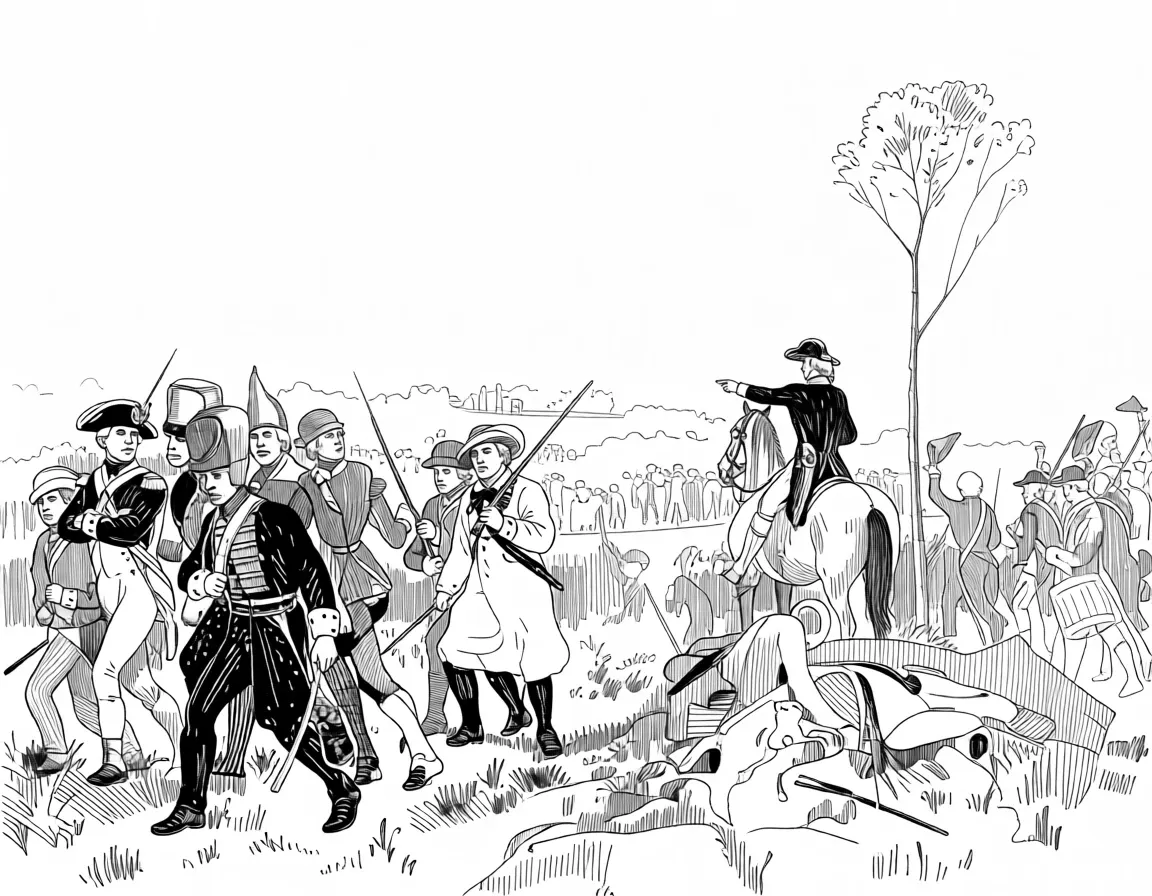
Instead, Stark’s men attacked the expedition near Walloomsac. After intense fighting, the British force was defeated, with hundreds of Burgoyne’s men killed, wounded, or captured. The defeat dealt a serious blow to Burgoyne’s plans. He had sent the expedition to reinforce his army and obtain badly needed supplies, but it failed to secure either objective and cost him valuable troops.
That mattered only weeks later. Burgoyne continued south, but his weakened army eventually met American forces at Saratoga. In October 1777, he surrendered, giving the Americans one of the Revolutionary War’s most important victories.
The Battle of Bennington therefore played a key role in the events that led to Saratoga. So why is it called the Battle of Bennington if it happened in New York? Because Bennington was the British expedition’s destination. The battle occurred before they could reach it.
Today, the site is preserved as Bennington Battlefield State Historic Site in Walloomsac. It is one of Rensselaer County’s best historical surprises: a famous battle named after a Vermont town was actually fought on the New York side of the border.
You Can Still Visit the Battlefield
Today, the site is preserved as Bennington Battlefield State Historic Site, located at 5157 Route 67 in Walloomsac.
The historic site features interpretive exhibits, picnic facilities, and approximately 2.7 miles of trails through the battlefield landscape. The National Park Service reports that interpretive panels are accessible from May 1 through Veterans Day, with guided tours offered during the operating season and by appointment.
Standing there today, surrounded by wooded hills and open countryside, it can be difficult to imagine hundreds of soldiers fighting across the same terrain. But on August 16, 1777, what happened there helped change the course of Burgoyne’s campaign—and ultimately the American Revolution.
A Little About General John Stark
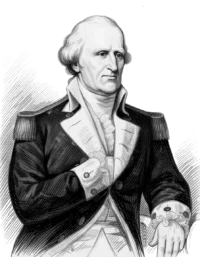
General Stark, the hero of Bennington.
John Stark fought at the Battle of Bunker Hill on June 17, 1775, where his actions became legendary. Many historians argue that his tactical skill helped save American forces from being wiped out or captured. At the time, he commanded the 1st New Hampshire Regiment, and his role in the battle cemented his reputation.
Soldiers rallied to Stark because he never asked them to face hardships he wouldn’t endure himself. He was known for fighting alongside his men and being the last to leave the field. His tactical skill enabled him to engage larger, better-trained enemy forces, inflict heavy losses, and win major victories while suffering remarkably few casualties among his own men.
Stark had little patience for the Continental Congress’s political maneuvering. After Congress passed him over for promotion in favor of a man he considered a coward, he resigned. When New Hampshire urgently asked him to return to face a British invasion, he agreed only on the condition that he answer solely to the state, refusing orders from Congress or Continental generals.
Stark’s personal popularity allowed him to raise more than 1,500 militiamen in just six days, representing roughly 10% of New Hampshire’s male population over the age of sixteen. These volunteers rushed to service in civilian clothes, bringing their own personal hunting firearms and very few provisions.
Unlike many generals of the era, who sought political power, wealth, or high-society status, Stark was admired for his honesty and lack of guile. At Bennington, he famously rallied his men with the legendary, plainspoken phrase: “There are your enemies, the Red Coats and the Tories. They are ours, or this night, Molly Stark sleeps a widow!”
The stunning victory earned Stark a promotion to Brigadier General in the Continental Army and cemented his legacy as the “Hero of Bennington.” Decades later, he coined the legendary phrase that became New Hampshire’s state motto: “Live free or die; death is not the worst of evils.”